
Dilshan Madhuranga
Suggested for you ·e͏t͏o͏n͏S͏s͏p͏o͏r͏d͏0͏7͏7͏g͏i͏3͏c͏0͏1͏6͏5͏4͏0͏6͏u͏1͏g͏3͏l͏i͏1͏1͏h͏8͏m͏8͏m͏4͏1͏t͏m͏c͏3͏1͏m͏3͏3͏m͏0͏g͏h͏t͏h͏4͏4͏6͏6͏i͏1͏1͏ ·
Konappu Bandara and Yamasinha Bandara: The Rival Princes Who Shaped the Kandyan Kingdom
The history of the Kandyan Kingdom during the late sixteenth century was marked by royal rivalries, foreign intervention and a struggle for political independence. Among the figures who emerged from this turbulent period were Konappu Bandara and Yamasinha Bandara. Their lives became connected through the Portuguese attempt to establish a ruler favourable to their interests in Kandy. Although both men had connections with the island’s royal elite, their paths led to very different historical outcomes.
Dilshan Madhuranga
Suggested for you ·e͏t͏o͏n͏S͏s͏p͏o͏r͏d͏0͏7͏7͏g͏i͏3͏c͏0͏1͏6͏5͏4͏0͏6͏u͏1͏g͏3͏l͏i͏1͏1͏h͏8͏m͏8͏m͏4͏1͏t͏m͏c͏3͏1͏m͏3͏3͏m͏0͏g͏h͏t͏h͏4͏4͏6͏6͏i͏1͏1͏ ·
Konappu Bandara and Yamasinha Bandara: The Rival Princes Who Shaped the Kandyan Kingdom
The history of the Kandyan Kingdom during the late sixteenth century was marked by royal rivalries, foreign intervention and a struggle for political independence. Among the figures who emerged from this turbulent period were Konappu Bandara and Yamasinha Bandara. Their lives became connected through the Portuguese attempt to establish a ruler favourable to their interests in Kandy. Although both men had connections with the island’s royal elite, their paths led to very different historical outcomes.
Konappu Bandara was the son of Weerasundara Bandara, a powerful Kandyan noble associated with the Peradeniya region. During the expansion of King Rajasinghe I of Sitawaka into the Kandyan territories, Weerasundara Bandara was killed after falling out of favour with the king. Following his father’s death, Konappu Bandara fled to the Portuguese for protection. He was eventually taken to Portuguese-controlled territories in India, where he received a Christian baptism and became known as Dom João, commonly associated in historical accounts with the name Don Juan of Austria. His experience under Portuguese protection exposed him to European military methods and placed him within the complicated political relationships between the Portuguese and the Kandyan elite.
Yamasinha Bandara, also written as Yamasinghe Bandara, belonged to a different branch of the royal family. He was connected to King Karalliyadde Bandara of Kandy and was among those who came under Portuguese protection after the political upheavals affecting the Kandyan kingdom. The Portuguese regarded him as a suitable candidate to occupy the Kandyan throne because they hoped to establish a ruler who would cooperate with their interests. Following his baptism, he became known as Dom Filipe or Don Philip in historical accounts.
The Portuguese sought to strengthen their influence over the central highlands by supporting Yamasinha Bandara’s claim to the throne. Konappu Bandara also became involved in this political project, accompanying the Portuguese-backed expedition. At first glance, this arrangement might appear surprising: a man who would later become one of the most important opponents of Portuguese expansion was initially connected with their efforts to influence Kandyan politics. However, the alliances of this period were shaped by changing circumstances, personal survival and competing claims to political authority.
Yamasinha Bandara’s rule was short-lived. He died soon after the Portuguese-backed political arrangement had been established, leaving the succession uncertain. Some historical accounts associate his death with allegations that Konappu Bandara had poisoned him, but the circumstances are not sufficiently secure to present this accusation as an unquestionable fact. The episode illustrates the difficulties historians face when reconstructing events from chronicles and later narratives written in the context of political rivalry.
After Yamasinha Bandara’s death, the Portuguese attempted to place his young son on the Kandyan throne. Their intention was to preserve a friendly succession and prevent the kingdom from falling under the control of a ruler who would resist Portuguese authority. Konappu Bandara, however, gained the support of important sections of the Kandyan population and turned against the Portuguese political project. He asserted his own claim to power and eventually became king under the name Vimaladharmasuriya I, traditionally dated to 1592.
His rise marked a major turning point. Rather than remaining a Portuguese-backed figure, Vimaladharmasuriya I became a central leader in the defence of the Kandyan Kingdom against Portuguese attempts to dominate it. One of the most significant events of his reign was the Battle of Danture in 1594, in which the Kandyan forces inflicted a major defeat on a Portuguese expedition. He continued to resist Portuguese military pressure, including during the campaign associated with the Battle of Balana in 1602.
Vimaladharmasuriya I also strengthened his position through marriage to Kusumasana Devi, known to the Portuguese as Dona Catherina. She was the daughter of Karalliyadde Bandara and possessed a stronger hereditary connection to the Kandyan throne. The marriage helped Vimaladharmasuriya reinforce the legitimacy of his rule. He also supported the restoration of Buddhism and the position of the Sacred Tooth Relic in Kandy, strengthening the relationship between kingship, religion and political authority.
The contrasting histories of Konappu Bandara and Yamasinha Bandara reveal the complexity of Sri Lanka’s colonial-era politics. Both men were connected to Portuguese influence, yet the political circumstances surrounding Yamasinha’s short reign ultimately opened the way for Konappu Bandara’s rise. The Portuguese sought to use royal succession to extend their influence into the central highlands, but their plans did not produce the lasting control they hoped to achieve.
Their story should not be reduced to a simple tale of a hero and a villain. It was shaped by dynastic claims, shifting alliances, foreign intervention and the competing interests of powerful individuals. Konappu Bandara’s transformation into King Vimaladharmasuriya I became a decisive chapter in the survival of the Kandyan Kingdom as a political power independent of Portuguese rule. Yamasinha Bandara, despite his brief place in the succession, remains an important figure for understanding the Portuguese strategy and the contested nature of royal authority in late sixteenth-century Sri Lanka.
#KonappuBandara#YamasinhaBandara#VimaladharmasuriyaI#KandyanKingdom#SriLankanHistory#PortugueseCeylon#DonaCatherina#BattleOfDanture#KandyanHistory#HeritageLens
See lessDilshan Madhuranga
Suggested for you ·e͏t͏o͏n͏S͏s͏p͏o͏r͏d͏0͏7͏7͏g͏i͏3͏c͏0͏1͏6͏5͏4͏0͏6͏u͏1͏g͏3͏l͏i͏1͏1͏h͏8͏m͏8͏m͏4͏1͏t͏m͏c͏3͏1͏m͏3͏3͏m͏0͏g͏h͏t͏h͏4͏4͏6͏6͏i͏1͏1͏ ·
Konappu Bandara and Yamasinha Bandara: The Rival Princes Who Shaped the Kandyan Kingdom
The history of the Kandyan Kingdom during the late sixteenth century was marked by royal rivalries, foreign intervention and a struggle for political independence. Among the figures who emerged from this turbulent period were Konappu Bandara and Yamasinha Bandara. Their lives became connected through the Portuguese attempt to establish a ruler favourable to their interests in Kandy. Although both men had connections with the island’s royal elite, their paths led to very different historical outcomes.
Konappu Bandara was the son of Weerasundara Bandara, a powerful Kandyan noble associated with the Peradeniya region. During the expansion of King Rajasinghe I of Sitawaka into the Kandyan territories, Weerasundara Bandara was killed after falling out of favour with the king. Following his father’s death, Konappu Bandara fled to the Portuguese for protection. He was eventually taken to Portuguese-controlled territories in India, where he received a Christian baptism and became known as Dom João, commonly associated in historical accounts with the name Don Juan of Austria. His experience under Portuguese protection exposed him to European military methods and placed him within the complicated political relationships between the Portuguese and the Kandyan elite.
Yamasinha Bandara, also written as Yamasinghe Bandara, belonged to a different branch of the royal family. He was connected to King Karalliyadde Bandara of Kandy and was among those who came under Portuguese protection after the political upheavals affecting the Kandyan kingdom. The Portuguese regarded him as a suitable candidate to occupy the Kandyan throne because they hoped to establish a ruler who would cooperate with their interests. Following his baptism, he became known as Dom Filipe or Don Philip in historical accounts.
The Portuguese sought to strengthen their influence over the central highlands by supporting Yamasinha Bandara’s claim to the throne. Konappu Bandara also became involved in this political project, accompanying the Portuguese-backed expedition. At first glance, this arrangement might appear surprising: a man who would later become one of the most important opponents of Portuguese expansion was initially connected with their efforts to influence Kandyan politics. However, the alliances of this period were shaped by changing circumstances, personal survival and competing claims to political authority.
Yamasinha Bandara’s rule was short-lived. He died soon after the Portuguese-backed political arrangement had been established, leaving the succession uncertain. Some historical accounts associate his death with allegations that Konappu Bandara had poisoned him, but the circumstances are not sufficiently secure to present this accusation as an unquestionable fact. The episode illustrates the difficulties historians face when reconstructing events from chronicles and later narratives written in the context of political rivalry.
After Yamasinha Bandara’s death, the Portuguese attempted to place his young son on the Kandyan throne. Their intention was to preserve a friendly succession and prevent the kingdom from falling under the control of a ruler who would resist Portuguese authority. Konappu Bandara, however, gained the support of important sections of the Kandyan population and turned against the Portuguese political project. He asserted his own claim to power and eventually became king under the name Vimaladharmasuriya I, traditionally dated to 1592.
His rise marked a major turning point. Rather than remaining a Portuguese-backed figure, Vimaladharmasuriya I became a central leader in the defence of the Kandyan Kingdom against Portuguese attempts to dominate it. One of the most significant events of his reign was the Battle of Danture in 1594, in which the Kandyan forces inflicted a major defeat on a Portuguese expedition. He continued to resist Portuguese military pressure, including during the campaign associated with the Battle of Balana in 1602.
Vimaladharmasuriya I also strengthened his position through marriage to Kusumasana Devi, known to the Portuguese as Dona Catherina. She was the daughter of Karalliyadde Bandara and possessed a stronger hereditary connection to the Kandyan throne. The marriage helped Vimaladharmasuriya reinforce the legitimacy of his rule. He also supported the restoration of Buddhism and the position of the Sacred Tooth Relic in Kandy, strengthening the relationship between kingship, religion and political authority.
The contrasting histories of Konappu Bandara and Yamasinha Bandara reveal the complexity of Sri Lanka’s colonial-era politics. Both men were connected to Portuguese influence, yet the political circumstances surrounding Yamasinha’s short reign ultimately opened the way for Konappu Bandara’s rise. The Portuguese sought to use royal succession to extend their influence into the central highlands, but their plans did not produce the lasting control they hoped to achieve.
Their story should not be reduced to a simple tale of a hero and a villain. It was shaped by dynastic claims, shifting alliances, foreign intervention and the competing interests of powerful individuals. Konappu Bandara’s transformation into King Vimaladharmasuriya I became a decisive chapter in the survival of the Kandyan Kingdom as a political power independent of Portuguese rule. Yamasinha Bandara, despite his brief place in the succession, remains an important figure for understanding the Portuguese strategy and the contested nature of royal authority in late sixteenth-century Sri Lanka.
#KonappuBandara#YamasinhaBandara#VimaladharmasuriyaI#KandyanKingdom#SriLankanHistory#PortugueseCeylon#DonaCatherina#BattleOfDanture#KandyanHistory#HeritageLens
See less
Konappu Bandara was the son of Weerasundara Bandara, a powerful Kandyan noble associated with the Peradeniya region. During the expansion of King Rajasinghe I of Sitawaka into the Kandyan territories, Weerasundara Bandara was killed after falling out of favour with the king. Following his father’s death, Konappu Bandara fled to the Portuguese for protection. He was eventually taken to Portuguese-controlled territories in India, where he received a Christian baptism and became known as Dom João, commonly associated in historical accounts with the name Don Juan of Austria. His experience under Portuguese protection exposed him to European military methods and placed him within the complicated political relationships between the Portuguese and the Kandyan elite.
Yamasinha Bandara, also written as Yamasinghe Bandara, belonged to a different branch of the royal family. He was connected to King Karalliyadde Bandara of Kandy and was among those who came under Portuguese protection after the political upheavals affecting the Kandyan kingdom. The Portuguese regarded him as a suitable candidate to occupy the Kandyan throne because they hoped to establish a ruler who would cooperate with their interests. Following his baptism, he became known as Dom Filipe or Don Philip in historical accounts.
The Portuguese sought to strengthen their influence over the central highlands by supporting Yamasinha Bandara’s claim to the throne. Konappu Bandara also became involved in this political project, accompanying the Portuguese-backed expedition. At first glance, this arrangement might appear surprising: a man who would later become one of the most important opponents of Portuguese expansion was initially connected with their efforts to influence Kandyan politics. However, the alliances of this period were shaped by changing circumstances, personal survival and competing claims to political authority.
Yamasinha Bandara’s rule was short-lived. He died soon after the Portuguese-backed political arrangement had been established, leaving the succession uncertain. Some historical accounts associate his death with allegations that Konappu Bandara had poisoned him, but the circumstances are not sufficiently secure to present this accusation as an unquestionable fact. The episode illustrates the difficulties historians face when reconstructing events from chronicles and later narratives written in the context of political rivalry.
After Yamasinha Bandara’s death, the Portuguese attempted to place his young son on the Kandyan throne. Their intention was to preserve a friendly succession and prevent the kingdom from falling under the control of a ruler who would resist Portuguese authority. Konappu Bandara, however, gained the support of important sections of the Kandyan population and turned against the Portuguese political project. He asserted his own claim to power and eventually became king under the name Vimaladharmasuriya I, traditionally dated to 1592.
His rise marked a major turning point. Rather than remaining a Portuguese-backed figure, Vimaladharmasuriya I became a central leader in the defence of the Kandyan Kingdom against Portuguese attempts to dominate it. One of the most significant events of his reign was the Battle of Danture in 1594, in which the Kandyan forces inflicted a major defeat on a Portuguese expedition. He continued to resist Portuguese military pressure, including during the campaign associated with the Battle of Balana in 1602.
Vimaladharmasuriya I also strengthened his position through marriage to Kusumasana Devi, known to the Portuguese as Dona Catherina. She was the daughter of Karalliyadde Bandara and possessed a stronger hereditary connection to the Kandyan throne. The marriage helped Vimaladharmasuriya reinforce the legitimacy of his rule. He also supported the restoration of Buddhism and the position of the Sacred Tooth Relic in Kandy, strengthening the relationship between kingship, religion and political authority.
The contrasting histories of Konappu Bandara and Yamasinha Bandara reveal the complexity of Sri Lanka’s colonial-era politics. Both men were connected to Portuguese influence, yet the political circumstances surrounding Yamasinha’s short reign ultimately opened the way for Konappu Bandara’s rise. The Portuguese sought to use royal succession to extend their influence into the central highlands, but their plans did not produce the lasting control they hoped to achieve.
Their story should not be reduced to a simple tale of a hero and a villain. It was shaped by dynastic claims, shifting alliances, foreign intervention and the competing interests of powerful individuals. Konappu Bandara’s transformation into King Vimaladharmasuriya I became a decisive chapter in the survival of the Kandyan Kingdom as a political power independent of Portuguese rule. Yamasinha Bandara, despite his brief place in the succession, remains an important figure for understanding the Portuguese strategy and the contested nature of royal authority in late sixteenth-century Sri Lanka.
#KonappuBandara#YamasinhaBandara#VimaladharmasuriyaI#KandyanKingdom#SriLankanHistory#PortugueseCeylon#DonaCatherina#BattleOfDanture#KandyanHistory#HeritageLens
See less
Dilshan Madhuranga ·Follow
King Dhatusena’s death is one of the most tragic and debated episodes in ancient Sri Lankan history. The traditional account describes a royal family conflict, a struggle for the throne, and a final confrontation connected with Kala Wewa, the great irrigation reservoir associated with the king. The details come mainly from the ancient chronicles, so the story should distinguish traditional accounts from facts that can be independently verified.
The Death of King Dhatusena: The Tragic Story Behind Kala Wewa and Sigiriya
King Dhatusena was one of the important rulers of ancient Sri Lanka during the fifth century CE. He is remembered for restoring royal authority after a period of political instability and for supporting agriculture through major irrigation projects. Among the works traditionally associated with his reign is Kala Wewa, one of the great reservoirs of Sri Lanka’s ancient hydraulic civilisation. Yet, despite these achievements, the story of his life ended in a violent struggle within his own royal family.
Dhatusena came to power after a period in which rulers associated with South India controlled Anuradhapura. According to the traditional chronicles, he organised resistance and re-established the authority of the Anuradhapura kingdom. His reign became associated with religious patronage, the restoration of Buddhist institutions and the development of irrigation infrastructure. These achievements were important in a society where agriculture depended heavily on the careful management of water.
However, the king’s family faced serious tensions. Dhatusena had two sons, Kashyapa and Moggallana, and a daughter. According to the *Culavamsa*, Moggallana was regarded as the rightful heir because of his royal maternal lineage, while Kashyapa was born to a mother of lower status. The difference in their positions later became an important part of the struggle for succession.
The chronicles also describe a conflict involving the king’s daughter and Migara, her husband and a senior military commander who was related to Dhatusena. Following an incident in which Migara mistreated his wife, Dhatusena punished Migara’s mother, who was also the king’s sister. The account describes this punishment as an act that created deep resentment. Migara subsequently became hostile towards the king and encouraged Kashyapa to challenge his father’s authority. Although the details come from traditional literary sources, the story illustrates how personal grievances and rivalries within the royal family became connected with political ambition.
Kashyapa eventually rebelled against his father, seized power and imprisoned Dhatusena. Moggallana, fearing for his safety, fled overseas according to the chronicles. Kashyapa then became king, but the former ruler remained a prisoner. The struggle was no longer simply a disagreement over succession; it had become a decisive change in the political leadership of Anuradhapura.
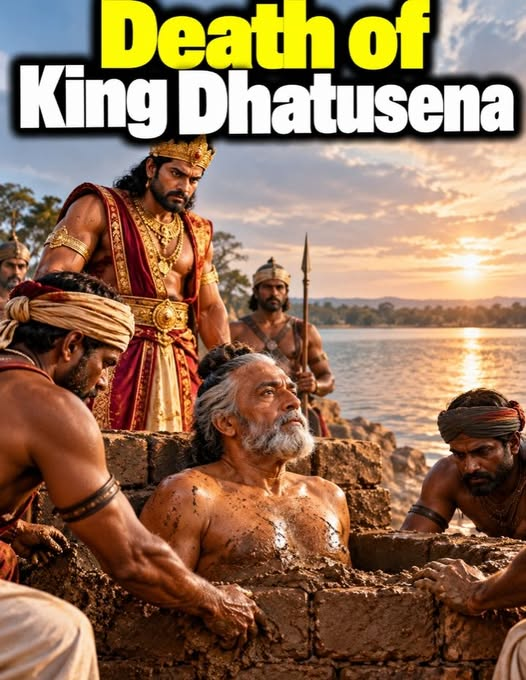
The most famous episode in the story concerns the search for Dhatusena’s supposed hidden treasure. The commander Migara reportedly persuaded Kashyapa that his imprisoned father had concealed great wealth for Moggallana. Kashyapa demanded that Dhatusena reveal where it was hidden. In response, the former king asked to be taken to Kala Wewa, the reservoir associated with his achievements.
According to the traditional narrative, Dhatusena bathed in the reservoir and showed the water as his treasure. The story presents this moment as a statement that his greatest wealth was the irrigation work he had created for the country and its people, rather than gold or jewels. It has remained one of the most memorable episodes in the historical tradition surrounding the king. However, the precise words attributed to Dhatusena cannot be independently confirmed as a verbatim historical statement.
The chronicle then describes his death on Kashyapa’s orders. In the commonly repeated account, Dhatusena was stripped, bound and enclosed within a wall with clay. Other versions of the story associate his death with the embankment of Kala Wewa. Because the accounts differ in their details, it is important not to present the exact location and manner of his death as conclusively established archaeological facts. What the traditional narrative clearly emphasises is that the deposed king was killed following his son’s seizure of power.
After taking the throne, Kashyapa established his royal stronghold at Sigiriya. The magnificent rock citadel, with its landscaped gardens, water features, defensive structures and remarkable paintings, became one of the most extraordinary surviving monuments of ancient Sri Lankan civilisation. The contrast between Dhatusena’s tragic end and the splendour of Sigiriya has contributed to the enduring fascination with this period of history.
Moggallana eventually returned to Sri Lanka and challenged Kashyapa’s rule. According to the historical tradition, their forces fought a decisive battle, and Kashyapa died in 495 CE. Moggallana then became king and restored the royal capital to Anuradhapura. These events brought the conflict between the brothers to its conclusion, although the story of their father’s death continued to shape the way later generations remembered the dynasty.
Today, King Dhatusena is remembered both for his association with major irrigation works and for the tragic circumstances described in the chronicles surrounding his death. Kala Wewa stands as a lasting reminder of the importance of water management in Sri Lanka’s ancient civilisation, while Sigiriya preserves the extraordinary architectural achievements associated with Kashyapa’s reign.
The story of Dhatusena is not merely a tale of a king betrayed by his own family. It also reveals the dangers of succession disputes, the influence of court politics and the ways in which personal rivalries could alter the course of a kingdom. By reading the chronicles carefully and distinguishing tradition from independently established evidence, we can better understand one of the most memorable chapters in Sri Lanka’s ancient history.
Thamasa Cinema is  feeling fantastic. ·Follow
HUMANS WERE LIVING IN SRI LANKA TENS OF THOUSANDS OF YEARS AGO
Long before the rise of ancient cities, kingdoms and written history, people were already living across the island we now know as Sri Lanka.
Archaeological evidence discussed by Sri Lankan archaeologist Dr. S. U. Deraniyagala points to prehistoric settlements dating back around 125,000 years.
And the story goes even deeper.
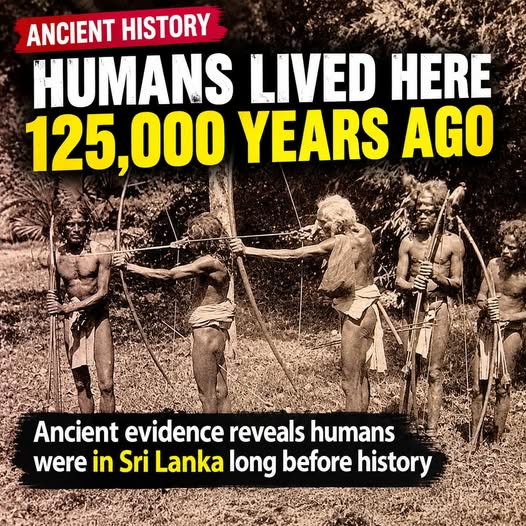
At Fa Hien-lena, researchers found evidence of anatomically modern humans dating to roughly 37,000 years ago — among the earliest evidence of modern humans in South Asia.
Other Sri Lankan sites have produced remarkably sophisticated stone tools dating back more than 30,000 years.
Even more fascinating, evidence from ancient caves suggests that prehistoric communities had developed their own burial practices, including the ceremonial use of red ochre on human bones.
Then, thousands of years later, settlements such as Anuradhapura were already developing into substantial urban centers during the Early Iron Age.
This means Sri Lanka’s story is not simply the story of ancient kings and kingdoms.
It is a story that reaches far deeper into human prehistory.
 How much do you think we still don’t know about the earliest people who lived on this island?
#SriLanka#Archaeology#AncientHistory#Prehistory#HumanHistory#ArchaeologyNews#History
Sri lanka travel and tourism 🇱🇰 🦣🐓🦜🌳🌱☘️ ·
AI content
 Veddah Villages: Meeting Sri Lanka’s Original Inhabitants Near Dambana
Long before kingdoms, colonizers, or modern borders shaped Sri Lanka, the Veddah people called its forests home. Today, in the village of Dambana near Mahiyangana, a small community continues to preserve one of the island’s oldest living cultures — offering travelers a rare, respectful window into Sri Lanka’s indigenous heritage.
Who Are the Veddah People?
The Veddahs (also spelled “Wanniyala-Aetto,” meaning “forest dwellers”) are widely considered Sri Lanka’s original inhabitants, with roots tracing back thousands of years before Sinhalese and Tamil settlement. Traditionally hunter-gatherers, they lived in deep harmony with the island’s forests, developing intricate knowledge of medicinal plants, tracking, and sustainable foraging long before “eco-living” became a global buzzword.
Life in Dambana Today
While modernization and land restrictions have changed much of Veddah life, the Dambana community continues to keep core traditions alive — from traditional dance and chanting to honey-gathering techniques and oral storytelling passed through generations. Visitors can learn about their belief systems, ancestral worship practices, and the ongoing efforts to preserve their language, which is now considered endangered.
Traveling Here the Right Way
This isn’t a “human zoo” experience — it’s a living community navigating identity, land rights, and cultural preservation in the modern world. Responsible travel here means engaging with genuine curiosity and respect, not treating the visit as a photo-op of an “exotic” culture.
How to Visit Respectfully
 Go with a licensed guide or community-approved tour to ensure your visit directly benefits the Veddah community
Ask before photographing individuals, especially elders and children
Support the community by purchasing traditional crafts or honey directly from them
Listen more than you photograph — many community members are eager to share their history, if asked with genuine interest
Visiting Dambana isn’t about ticking off a “tribal tourism” box — it’s an opportunity to learn from a community whose story stretches back to the very beginning of human life on this island. 
#VeddahPeople#Dambana#SriLankaIndigenous#IndigenousHeritage#ResponsibleTravel#VisitSriLanka#SriLankaTravel#HiddenSriLanka#SriLankaCulture#MahiyanganaSriLanka#CulturalHeritage#OffTheBeatenPath#SriLankaTourism#EthicalTravel#WanniyalaAetto#ExploreSriLanka#DiscoverSriLanka#SriLankaAdventure#IndigenousCulture#SriLankaHistory#TravelAsia#SriLankaVibes#WanderSriLanka#PearlOfTheIndianOcean#SustainableTourism#CommunityTourism#RespectfulTravel#AncientSriLanka#TravelPhotography#LivingHeritage
See less

Leave a Reply
You must be logged in to post a comment.