
Dilshan Madhuranga
Who Was John D’Oyly? The British Official Behind the Fall of the Kandyan Kingdom
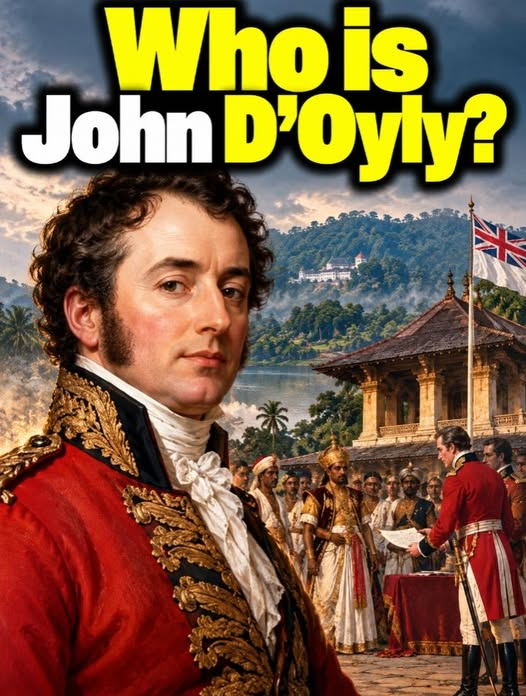
Sir John D’Oyly (1774–1824) was a British colonial administrator who played a significant role in one of the most important turning points in Sri Lankan history: the British takeover of the Kandyan Kingdom in 1815. Known for his knowledge of the Sinhala language, his understanding of Kandyan customs and his connections with influential local nobles, D’Oyly became a central figure in the negotiations that brought the last independent kingdom of Sri Lanka under British rule. His story remains an important part of the island’s colonial history. <Cite refs={[“turn516206search1″,”turn516206search0”]}/>
D’Oyly entered the British colonial administration in Ceylon in the early nineteenth century. During his service in Matara, he studied Sinhala language and literature under the Buddhist monk Karatota Dharmarama Nayaka Thera. His linguistic ability helped him communicate with local officials, religious figures and members of the Kandyan aristocracy. In 1805, he became a chief government translator, and his subsequent appointments gave him increasing influence within the colonial administration. <Cite refs={[“turn516206search1″,”turn516206search19”]}/>
At the beginning of the nineteenth century, British control was largely concentrated in Sri Lanka’s coastal regions, while the Kandyan Kingdom remained independent under King Sri Vikrama Rajasinha. Relations between the kingdom’s ruler and some of its leading chiefs became increasingly strained. The
British administration recognised these internal divisions and sought to use its connections with Kandyan nobles to extend its authority into the island’s central highlands.
D’Oyly became an important intermediary between the British government and influential Kandyan chiefs. His familiarity with Sinhala society and his communication with local elites made him valuable to Governor Robert Brownrigg’s administration. Historical accounts describe his involvement in gathering intelligence and building relationships with nobles who opposed the king. The National Archives of Sri Lanka identifies him as a key strategist in the British campaign to take control of the Kandyan Kingdom. <Cite refs={[“turn516206search1″,”turn516206search4”]}/>
In 1815, British forces entered Kandy, and King Sri Vikrama Rajasinha was captured and removed from power. D’Oyly played a major role in the negotiations between the British administration and the Kandyan chiefs. On 2 March 1815, the Kandyan Convention was concluded, formally transferring sovereignty over the kingdom to the British Crown. D’Oyly is widely credited with drafting the convention, which set out the terms of the change in government. <Cite refs={[“turn516206search1″,”turn516206search19”]}/>
The Kandyan Convention is particularly significant because it included provisions concerning Buddhism, the traditional rights of the chiefs and the administration of the former kingdom. It declared that the rights and privileges of Buddhism would be protected. However, the transfer of sovereignty marked the end of the Kandyan Kingdom’s independence, which had survived successive Portuguese and Dutch colonial expansion along the coast. The convention therefore occupies a complicated place in Sri Lankan history: it contained assurances about established institutions while also establishing British authority over the central kingdom. <Cite refs={[“turn516206search25″,”turn516206search26”]}/>
Following the takeover, D’Oyly was appointed Resident and First Commissioner in the Kandyan provinces. He remained in Kandy and became involved in administering the newly acquired territory through the existing system of chiefs and officials. Yet British control did not immediately produce stability. The Uva–Wellassa rebellion of 1817–1818 demonstrated the depth of resistance to colonial rule and the tensions surrounding the transformation of Kandyan political authority. The rebellion was suppressed by the British, after which colonial administration in the interior became more firmly established.
D’Oyly’s knowledge of Kandyan customs and his ability to communicate in Sinhala contributed to his influence, but historians have interpreted his role in different ways. Some accounts emphasise his interest in local language and culture, while others focus on his intelligence-gathering activities and his role in exploiting divisions among the Kandyan elite. These aspects should be considered together when examining his historical legacy. Cultural knowledge and administrative skill served not only as means of understanding Sri Lankan society but also as tools of British colonial expansion. <Cite refs={[“turn516206search1″,”turn516206search4”]}/>
In recognition of his service, D’Oyly was created a baronet in 1821. He remained in Kandy until his death on 25 May 1824. His life ended in the same city where he had helped negotiate the agreement that transformed the island’s political future. His career illustrates how colonial expansion could depend not only on military strength but also on language, diplomacy, intelligence and alliances with local political figures. <Cite refs={[“turn516206search0″,”turn516206search2”]}/>
Today, John D’Oyly remains a significant and controversial figure in the history of Sri Lanka. To understand him is to understand more than the biography of a British official. His actions reveal the political struggles within the Kandyan court, the strategies employed by the British administration and the circumstances that led to the loss of the kingdom’s independence in 1815. The story also reminds us that historical events should be examined through documentary evidence and multiple perspectives, recognising both the decisions of political leaders and the consequences experienced by the wider population.
#JohnDOyly#KandyanKingdom#KandyanConvention#SriLankanHistory#ColonialCeylon#SriVikramaRajasinha#KandyHistory#BritishColonialism#UvaWellassaRebellion#ForgottenHistory#HeritageLens
See less

Leave a Reply
You must be logged in to post a comment.