
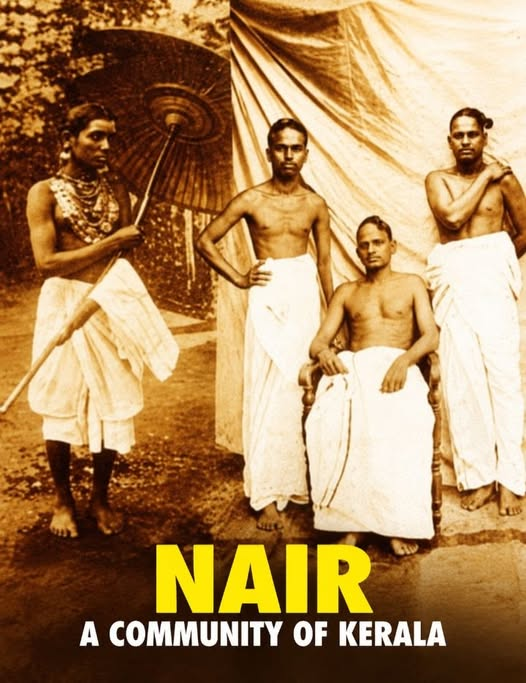
The Nairs, also known as Nayars, are one of the historically significant communities of Kerala
Dilshan Madhuranga
The Nairs, also known as Nayars, are one of the historically significant communities of Kerala in southern India. Rather than being a single uniform caste, the Nair community traditionally consisted of several related groups and subdivisions, each with differences in customs and social practices. Their history is deeply connected with Kerala’s traditional political, military, social and cultural life.
For centuries, Nair families lived mainly in the region that is now Kerala, where Malayalam became their principal language. One of the most distinctive features of traditional Nair society was the tharavad, a large family household based on descent through the female line. Property and family identity were often connected to the mother’s lineage, creating a social structure quite different from the predominantly patrilineal systems found elsewhere in India.
The military history of the Nairs is particularly notable. During the medieval period, Kerala was divided among numerous kingdoms and local chieftains, and warfare between these states was common. Nair men formed an important part of the armies and were traditionally trained in martial arts, especially Kalaripayattu. European travellers who visited Kerala frequently described the Nairs as a martial community whose men were accustomed to carrying weapons.
By the time the Portuguese arrived on the Malabar Coast in 1498, Nair soldiers were closely associated with the armies of several Kerala rulers. The Portuguese, Dutch, French and British subsequently became involved in the politics and trade of the region, particularly the lucrative pepper trade. Nair rulers and military forces became involved in many of these conflicts as Kerala’s traditional political system gradually came under European influence.
One important period came during the reign of Marthanda Varma, who became ruler of Venad in 1729 and later established the powerful Travancore kingdom. He reorganised the military and administration and reduced the independent power of local Nair chiefs. The Travancore army, which included large numbers of Nair soldiers, became an organised standing force. The army famously defeated the Dutch at the Battle of Colachel in 1741, one of the most significant military encounters between an Asian kingdom and a European colonial power in South Asia.
The relationship between the Nairs and the British later became increasingly complicated. In 1809, Velu Thampi, the Nair Dewan of Travancore, led an armed rebellion against increasing British influence. The rebellion was eventually defeated, and the traditional military power of the Nair chiefs was greatly reduced. The Nair forces were subsequently reorganised, and the Travancore Nair Brigade continued in a different role under British influence.
Nair society also underwent major changes during the nineteenth and early twentieth centuries. Traditional tharavads began to decline as economic conditions, property laws and changing ideas about family life transformed Kerala society. Some families lost land and wealth, while education and government employment became increasingly important avenues for social advancement.
The community also produced important social reformers. Mannathu Padmanabha Pillai founded the Nair Service Society in 1914, which sought to improve education, social welfare and economic conditions among Nairs and to reform some traditional practices. The organisation became one of Kerala’s major community-based social organisations.
Religion and cultural traditions have also played an important role in Nair history. Bhagavati, the goddess associated with power, fertility and protection, has traditionally been an important deity. Serpent worship was another distinctive practice, with sacred serpent groves known as sarpakavu traditionally maintained on family properties. These traditions remain part of Kerala’s wider cultural heritage.
Nairs have also made significant contributions to Kerala’s literature and performing arts. Kathakali, one of Kerala’s best-known classical dance-drama traditions, developed with strong connections to Nair rulers, soldiers and families who patronised the art. Nair communities also contributed to Malayalam literature, education, administration and other fields.
The history of the Nairs therefore extends far beyond the story of a single caste. It reflects the transformation of Kerala itself, from a landscape of small kingdoms and warrior households to a modern Indian state shaped by colonialism, social reform, education and changing family structures.
Today, Nairs remain an important community in Kerala and among the Malayali diaspora around the world. Their traditional military heritage, tharavad system, religious customs, literature and role in the political history of Kerala continue to form an important part of the region’s historical memory.
What part of Nair history or culture did you find most interesting: the traditional tharavad family system, their martial traditions, Kathakali, religious customs, or their role in Kerala’s history? Share your thoughts or family stories in the comments.
#Nair#Nairs#Nayar#KeralaHistory#IndianHistory#KeralaCulture#MalayaliHistory#Kalaripayattu#Kathakali#Tharavad#SouthIndianHistory#ForgottenHistory#HiddenHistory#Heritage#HistoryOfIndia

Leave a Reply
You must be logged in to post a comment.