
Departure of British rulers from Ceylon left Tamils high and dry
17 Jan 2026 – 186
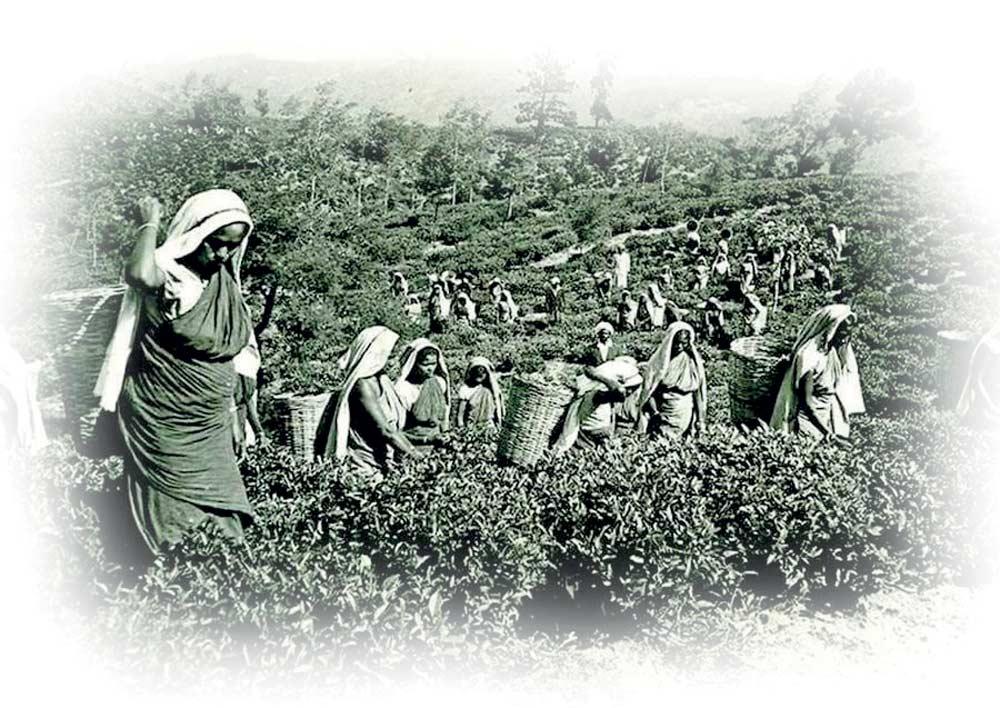
The arrival of colonial rulers was the root cause of the Tamil national question
In the climax of the crisis and long-standing ethnic conflict, while preserving the territorial integrity and sovereignty of Sri Lanka, the political solution needs to be adopted based on the power sharing- faute de mieux for unity, permanent peace, tranquility
All these unscrupulous patterns and practices must be uprooted from the political platform, and then only the country will blossom with a democratic ambiance, civil liberty, economic growth, and prospects

Within a short time span since the British rulers left Ceylon, the Tamils have been subjected to a quagmire situation wherein there is no dearth of discrimination, racism, religious fanaticism, chauvinism, xenophobia, misanthropy, violence, racial riots, militarisation, state terrorism, and other wrongful acts that were exercised by successive governments in the country against the politically powerless minority Tamil community.
Such governments have been elected and represented mainly by the majority Sinhalese community. Tamils, being a minority, do not have political power democratically. Throughout the last several decades, Tamil people faced untold suffering and misery.
During the colonial era, under British rulers, Tamils were immersed in the English language and held higher positions in Ceylon’s public services and armed forces. Most professionals such as doctors, engineers, advocates, architects, and accountants were significantly Tamils.
After Ceylon gained independence, the Tamils were victimised by the atrocities committed by the successive rulers of the country. There were discrimination, death, and destruction against minority Tamils. Indian-origin Tamils were denied their citizenship and made stateless, and following that, their franchise-voting rights were stripped off. The policy of standardisation was introduced for university admissions of bias against Tamil-medium students, under which system many Tamil students were deprived of obtaining their higher studies at university, whereas Sinhala-medium students were benefitted. The Tamil language had been undermined by the Sinhala official language act, and it was a stumbling block to the Tamils to get employment opportunities in state services. By the time British rulers left the country, under the Soulbury Constitution, minority rights were protected by Section 29(2) of the Constitution, which prevented the Parliament from enacting laws against minorities in respect of religion and language in a racial discriminatory manner. Later on, such safeguard provisions for minority people’s rights were snuffed out of the supreme law of the land. Buddhism was given the first and foremost place despite the fact that Sri Lanka is a multi-religious nation. There had been a sequence of racial riots orchestrated in the years of 1956, 1958, 1977 and 1981 and reached a crescendo in 1983 – popularly known as ‘Black July’ – against Tamils by the Sinhalese political mobs. The earlier system was to use English alphabet letters from the country’s name in vehicles, CEYLON (CE, CL, CN, EY, EN, etc.). In 1957, the Government wanted it to begin with the Sinhala ‘Sri’, and the Tamil politicians resented this as a form of Sinhala imposition. They protested and demanded that the Tamil ‘Shree’ also be substituted, and the Federal Party began an anti-Sri campaign.
One of the best libraries in South Asia, the Jaffna library, was set ablaze along with over 96,000 volumes of books and irreplaceable manuscripts. During the thirty-year civil war in the Northern and Eastern Provinces, where Tamils were internally displaced from their own dwellings and living in temporary shelters as refugees, the Tamil civilians were killed by security forces, and the Air Force carried out aerial bombing attacks on churches, Hindu temples, schools, and hospitals in which many were killed, wounded, and disabled; there were security checkpoints from place to place, and an indefinite curfew and economic embargo were imposed, which were a nuisance to the ordinary life pattern of people. The Tamil political prisoners had been arrested and languished for many years in prison, and still a few have remained the same without being released. The worst-case scenario was that the Tamil schoolgirl and women were raped and killed by security forces. Meanwhile, Sinhalese were targeted and killed and Muslims were expelled from the Northern Province by separatist Tamil Tigers. The residential and agricultural lands of Tamils were encroached upon for the sake of security forces requirements under the guise of ‘High Security Zones’. State-sponsored Sinhalese settlements were made in the regions where Tamils lived with the purpose of changing demographic content.
There had been an impediment to the commemoration of those who died in the war by their family members and loved ones. The Department of Archaeology, from time to time, obstructs Tamils from entering their religious sites for their worship, claiming Tamil-owned land as belonging to the ‘archaeological sites’. The farmers have been banned from doing their cultivation by the Department of Wildlife and the Forest Department, claiming that land belongs to the departments. And the reality is that farmers had been cultivating in those lands traditionally and historically from time immemorial. Ancestral lands of Tamils are being illegally acquired and constructed Buddhist temples with the support of the law enforcement authorities.
Amalgamation of separate kingdoms
Most importantly, all three separate kingdoms were amalgamated by the British rulers; that was the instrumental factor in cropping up the ethnic conflict. Prior to the advent of colonial rulers in our country, there were three independent kingdoms: The Kotte Kingdom, the Kandy Kingdom, and the Jaffna Kingdom, also known as the Kingdom of Aryachakravarti, were historic monarchies. The colonial rulers initially captured coastal areas; only in 1815 the British colonial rulers were able to apprehend the last King of Kandy, Sri Wickrama Rajasingha-Kannasamy and brought Kandy Kingdom under the subjugation of the British. It was due to Sri Wickrama Rajasingha’s courtier Ehelepola Nilame, fraternising with British rulers, who betrayed his king. For administrative purposes, the British rulers merged all three independent kingdoms under one governing entity, which eventually paved the way for ethnic conflicts and civil war in the wake of their exit from the island. Ever since Ceylon gained independence, it has been oozing blood out of the wounds of Tamils.
Under the British fiefdom, the Sinhalese and the Tamils were equally politically powerless, and there was no communal violence; hence, there had not been a need for Tamils to migrate from Ceylon to Western countries. Following the departure of British rulers, political powers have been vested in the hands of the majority Sinhalese people, and discrimination, violence, and bloodcurdling have been unleashed against the politically powerless minority Tamils. The Tamil culture has been embraced without encumbrance in European countries. The Sri Lankan Tamils have been well treated by the people of Western countries with dignity and respect. The Tamils live there with overwhelmingly great facilities and freedom.
Include and exclude crucial factors
The country must be governed in compliance with the democratic principles, the rule of law, natural justice, human rights tenets, international norms and practices, and economic strategies, but at variance with which, it is riddled with racism, sectarianism, chauvinism, extremism, pseudo-patriotism, racial hysteria, authoritarianism, fascism, corruption, fraudulent activities, red herrings, nepotism, cronyism, impunity, and self-centered politics. All these unscrupulous patterns and practices must be uprooted from the political platform, and then only the country will blossom with a democratic ambiance, civil liberty, economic growth, and prospects.
In the climax of the crisis and long-standing ethnic conflict, while preserving the territorial integrity and sovereignty of Sri Lanka, the political solution needs to be adopted based on the power sharing — faute de mieux for unity, permanent peace, tranquility. In 1926, the federal system was first introduced in Ceylon by the highly respected late Prime Minister, Oxford University-manufactured S.W.R.D. Bandaranaike. In 2017, the Supreme Court of Sri Lanka delivered a judgement that federalism is not separatism; it is also not unconstitutional. So, there is no need to panic unnecessarily that federalism would pave the way for separatism. Even after the war was over, all bets are off on the future of the rights and aspirations of Tamil people.
The arrival of colonial rulers was the root cause of the Tamil national question, and the Tamils have been in grave peril – having fallen off the cliff in the country’s political, social, cultural and economic spheres all along the line of the British ruler’s departure to date.
Leave a Reply
You must be logged in to post a comment.