
How Can Thileepan Be Called a Terrorist?
Swami Shankarananthaa
September 27, 2026
Police removing the bronze statue of Thileepan in Nallur; supplied photograph
Dear friends,
The bronze statue recently installed in Nallur, Jaffna, in memory of Thiyaga Theepam Thileepan was removed today, September 27, 2026, by the Sri Lankan police.
The statue has been removed on the stated ground that it commemorated a person associated with a “terrorist organisation.”
This incident raises an important historical and legal question.
Advertisement
On what legal basis is Thileepan, who lived during the period of the general amnesty under the 1987 Indo–Sri Lanka Accord and chose a hunger strike rather than a weapon for his final protest, classified as a terrorist today?
Portrait of Thileepan; supplied photograph
On July 29, 1987, Indian Prime Minister Rajiv Gandhi and Sri Lankan President J. R. Jayewardene signed the Indo–Sri Lanka Accord.
Clause 2.11 of that accord provided for a general amnesty for political and other prisoners held under the Prevention of Terrorism Act and emergency laws, for combatants, and for those accused, charged or convicted under those laws.
A ceasefire and the surrender of arms were also undertaken on the basis of that accord.
At the arms-surrender ceremony at Palaly on August 5, 1987, General Sepala Attygalle, then Secretary of Sri Lanka’s Ministry of Defence, handed a document confirming the amnesty to a representative of the Liberation Tigers.
The general amnesty for combatants, therefore, was not a political interpretation invented later.
It was an arrangement accepted in writing under the Indo–Sri Lanka Accord.
After that political change, many who had been active in various Tamil armed movements later participated directly in Sri Lankan parliamentary politics.
Selvam Adaikalanathan continues to serve as a member of Parliament.
Dharmalingam Sithadthan, Suresh Premachandran and Govindan Karunakaram have also served as members of Parliament.
Douglas Devananda has served for many years as a member of Parliament and as a minister in the Sri Lankan government.
Against this historical background, how can Thileepan’s position within the political circumstances of that amnesty alone be regarded as entirely different?
After the Indo–Sri Lanka Accord, Thileepan did not present his demands through an armed action.
His final protest was neither a gun nor a bomb nor an armed attack.
On September 15, 1987, he began a hunger strike in Nallur, taking neither food nor water.
He placed his five demands before the Indian government and made his own body the instrument of his protest.
Thileepan during his hunger strike; supplied historical photograph
Thileepan remained on hunger strike and died on its twelfth day, September 26, 1987.
Thileepan did not die in an armed confrontation.
He did not die while carrying out an armed attack.
He died at the end of a hunger strike without food or water.
The historical chronology matters greatly here.
Thileepan died on September 26, 1987.
Only afterward, at the beginning of October, did the situation change sharply.
Seventeen Liberation Tigers, including Pulendran and Kumarappa, were arrested by the Sri Lankan Navy and taken to Palaly.
The attempt to take them to Colombo created a major controversy over the implementation of the general amnesty granted under the Indo–Sri Lanka Accord.
On October 5, 1987, they ingested cyanide.
Twelve of them, including Pulendran and Kumarappa, died.
The situation then deteriorated rapidly; the relationship between the Indian Peace Keeping Force and the Liberation Tigers broke down and turned into open armed conflict.
But Thileepan had already died before all these events.
He died on September 26.
The major armed confrontation between Indian forces and the Liberation Tigers arose afterward.
It would therefore not be an honest approach to history to take subsequent political and military events and use them to reassess the legal and political circumstances that existed earlier in 1987.
The fact that an organisation is legally banned today cannot simply be conflated with the political context of the ceasefire, surrender of arms and general amnesty under the 1987 Indo–Sri Lanka Accord.
There may be different views about Thileepan’s affiliation with a political organisation.
One person may accept his political goals.
Another may reject them.
But it is an undeniable historical fact that the final protest he undertook in September 1987 was not an armed struggle.
It was a hunger strike without food or water.
Through that hunger strike he presented his five demands to the Indian government.
And in that hunger strike he lost his life.
It is against this historical background that I put a direct question to Sri Lanka’s Attorney General, President Anura Kumara Dissanayake and the Sri Lankan government.
During a period when combatants had been granted a general amnesty under the 1987 Indo–Sri Lanka Accord,
Rasiah Parthipan, known as Thileepan, chose the nonviolent method of a hunger strike instead of armed action,
presented his demands to the Indian government,
and died during that hunger strike.
On what legal basis do you classify him as a “terrorist” today?
I also raise this question in the context of the Sri Lankan Sinhala-Buddhist majoritarian political approach to the Tamil people’s right to remembrance, which I have criticised for a long time.
Thileepan speaking at a public event; supplied historical photograph
Look at the Indo–Sri Lanka Accord signed on July 29, 1987.
Look at its clause 2.11.
Look at the general amnesty provided under it.
Look at September 15, when Thileepan began his hunger strike, and September 26, when he died.
Look, too, at the chronology of the events that followed in October.
On that basis, explain in legal and historical terms the grounds on which you call Rasiah Parthipan, known as Thileepan, a “terrorist” today.
In light of that historical background,
my position is that “Thileepan was not a terrorist.”
Those who disagree with that position should put forward a legal and historical explanation, rather than one based on emotion,
grounded in the 1987 Indo–Sri Lanka Accord,
the general-amnesty arrangements of that time,
and the chronology of Thileepan’s final hunger strike.
Swami Shankarananthaa 
See less
திலீபன் நினைவிடத்தின் கதை என்பது ஒரு நினைவுத்தூபி பல தடவைகள் கட்டப்பட்டதும் இடிக்கப்பட்டதும் பற்றிய வரலாறு மட்டும் அல்ல. அது இலங்கையின் கடந்த நாற்பது ஆண்டுகால அரசியல் மாற்றங்கள், போர், சமாதான முயற்சிகள், நினைவுகூரலுக்கான உரிமை, தடைசெய்யப்பட்ட அமைப்புகளுக்கான சட்டக் கட்டுப்பாடுகள் மற்றும் வடக்கு–தெற்கு அரசியல் பார்வைகளுக்கிடையேயான முரண்பாடுகள் ஆகிய அனைத்தும் சந்திக்கும் ஒரு இடமாகவும் மாறியுள்ளது.
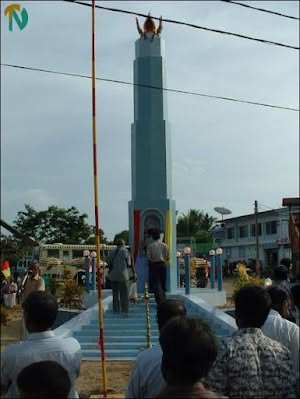
1988/89 — நினைவுத்தூபி சிவிகே சிவஞானத்தின் சொந்த நிதியில் கட்டப்பட்டது.
1996 — அழிப்பு.
2003 — மீள்கட்டுமானம் – சிவிகே சிவஞானம் தலைமையில் அங்குரார்ப்பணம்.
2006 — சேதப்படுத்தல்.
2007 — மீண்டும் அழிப்பு.
2010 மற்றும் 2012 — எஞ்சிய பகுதிகளின் அழிப்பு.
2015க்குப் பின்னர் — பொதுவெளி நினைவுகூரல்கள் மீண்டும் அதிகரிப்பு.
2026 — புதிய வெண்கல உருவச்சிலை; பன்னிரண்டு நாட்களுக்குள் காவல்துறையால் அகற்றல்
படம்: 1989 இல் நிறுவப்பட்ட தூபி

Leave a Reply
You must be logged in to post a comment.